Chess Rules
Take turns moving your pieces and try to trap your opponent's king.
Basic rules
White moves first. Then players take turns, one move at a time.
How to set up the board
- Place the board with a light square in your bottom-right corner.
- On the back row, work inward from each corner: rook, knight, bishop. The queen and king go in the middle.
- Put the queen on her own color.
- Place all eight pawns on the row in front.
Moving and capturing
- Move onto an enemy piece's square to capture it. Captured pieces cannot be used again.
- You cannot move onto a square occupied by one of your own pieces.
- You cannot skip your turn.
How the six pieces move
Only the knight can jump over other pieces.
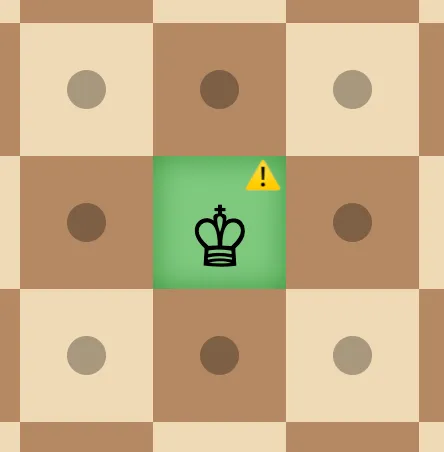
King
One square in any direction.
It cannot move to a square attacked by an enemy piece.
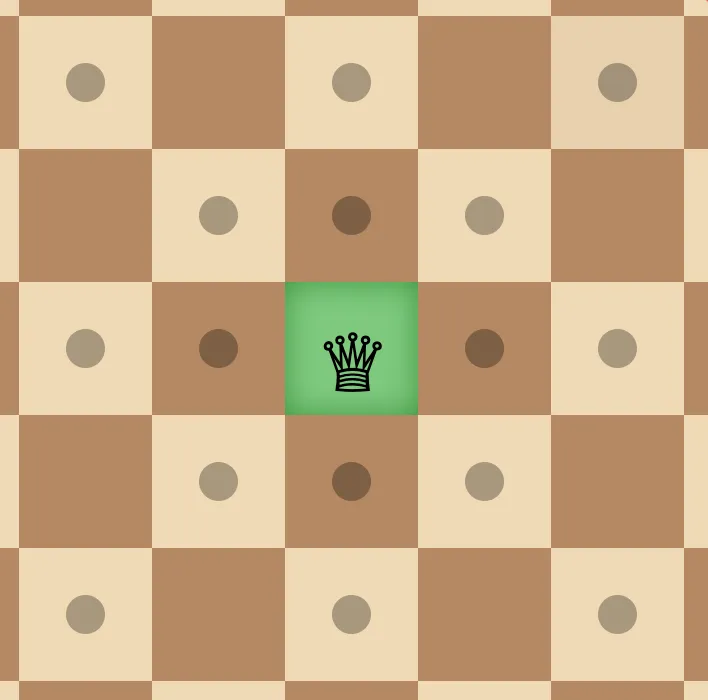
Queen
Any number of squares vertically, horizontally or diagonally.
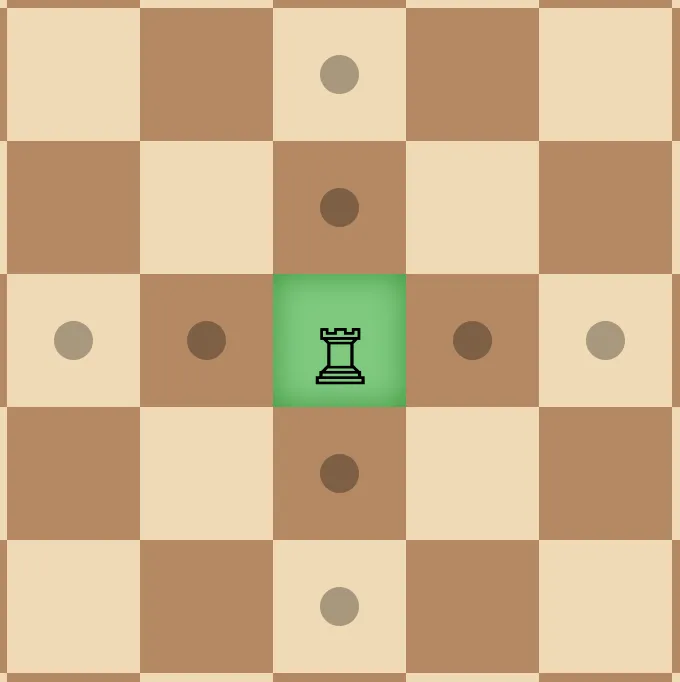
Rook
Any number of squares vertically or horizontally.
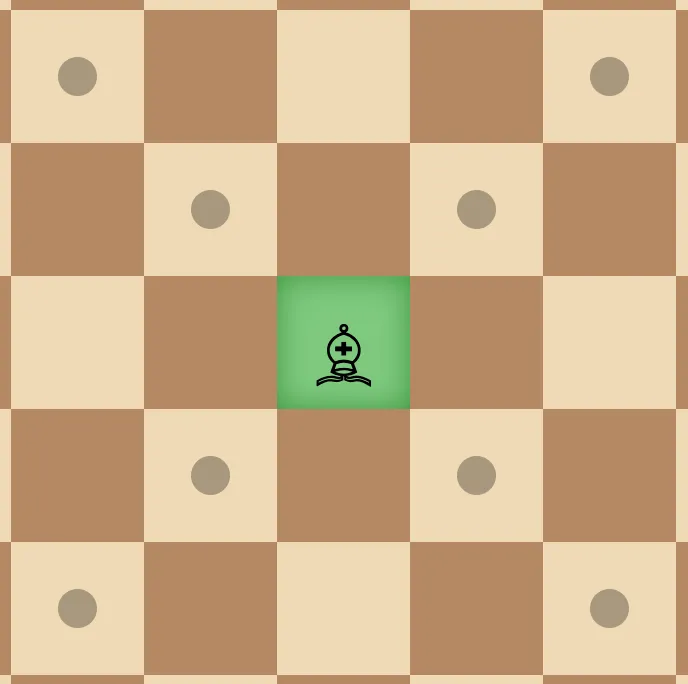
Bishop
Any number of squares diagonally.
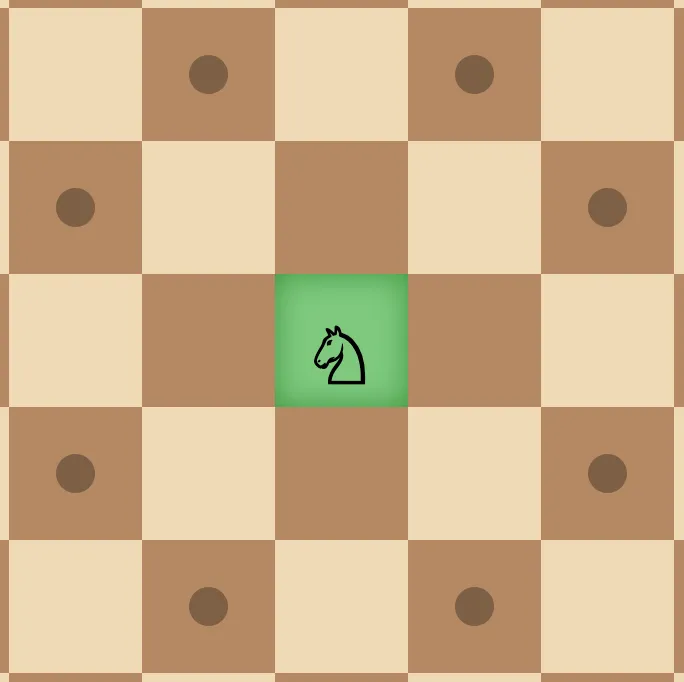
Knight
An L-shaped jump: two squares in one direction, then one sideways.
It jumps over other pieces.
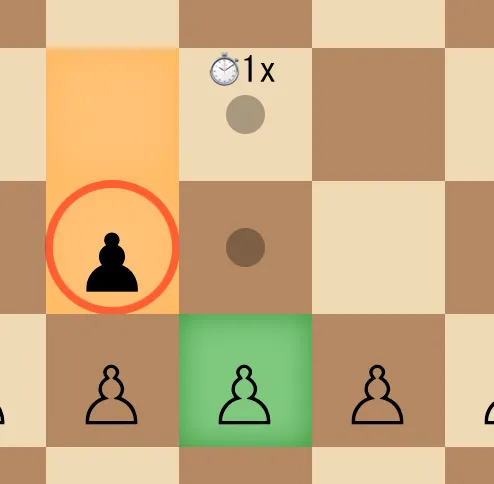
Pawn
Move one square forward.
Capture one square diagonally forward.
Pawns cannot move backward. A piece directly ahead blocks the pawn and cannot be captured by it.
From its starting square, a pawn may move two squares if both are empty.
At the far end of the board, it promotes to another piece.
Win by trapping the king
When an enemy piece attacks your king, you are in check.
You must get out of check on your next move:
- Move your king to safety.
- Capture the attacking piece.
- Put a piece in between to block the attack.
If none of these works, you are checkmated and lose. The king is never actually captured.
When can you not block a check?
You cannot block a knight's check, or a check from a square right next to the king. Move the king to safety or capture the attacking piece.
If you are not in check but have no legal move with any piece, the game is a draw. This is called stalemate.
More rules
Three special moves
Castling
Move the king and a rook in one turn. The king moves two squares toward the rook, then the rook moves to the square the king crossed.
All of these conditions must be met:
- Neither the king nor that rook has moved before.
- No pieces stand between them.
- The king's starting square, the square it crosses and its destination are not attacked.
Kingside vs queenside, and the rules people get wrong
Using the rook on the king's side is kingside castling. Using the one on the queen's side is queenside castling. The king moves two squares either way.
A king or rook that has moved cannot castle, even if it returns to its starting square.
The rook may be under attack. A square crossed only by the rook may also be attacked.
En passant
A special pawn capture available when an enemy pawn advances two squares:
- Your pawn is already on the fifth row from your side.
- An enemy pawn moves two squares and lands right beside it.
- On your very next turn, your pawn may move diagonally onto the square the enemy pawn crossed, capturing that pawn.
You must do it immediately. If you play another move, you lose the chance.
Pawn promotion
A pawn reaching the far end of the board immediately becomes a queen, rook, bishop or knight. This is called promotion.
The piece you choose does not need to have been captured earlier, so you can have two or more queens.
Which piece should you choose?
A queen is usually the strongest choice, though another piece can sometimes be better. You cannot choose a king or keep the pawn.
On this site, Settings lets you choose between always promoting to a queen and picking a piece each time.
Draws
No legal moves: stalemate
You are not in check, but have no legal move with any piece. You do not lose: the game is drawn.
Other draws
The same position repeats
You may claim a draw when the same position occurs three times. After five occurrences, the draw is automatic.
The pieces, the player to move, and the ability to castle or capture en passant must all be the same.
Fifty moves each without a capture or pawn move
You may claim a draw after each player makes fifty moves without a capture or pawn move. After seventy-five moves each, the draw is automatic, unless the last move delivers checkmate.
Neither player can checkmate
If no possible sequence of legal moves can lead to either player delivering checkmate, the game is drawn. Two lone kings are one example.
Both players agree to a draw
The players agree to end the game with no winner.
This site automatically detects stalemate, insufficient material, threefold repetition and the fifty-move rule, and declares the draw as soon as one occurs.
Resigning and running out of time
Resigning means accepting a loss and ending the game.
In a timed game, running out of time normally means a loss. If no possible sequence of legal moves would let your opponent checkmate you, it is a draw.
Ready for more? A few playing tips
Three habits to start with
- Move a center pawn to make room for other pieces.
- Bring out your knights and bishops, and castle early.
- Before moving a piece, check whether your opponent could take it for free.
A guide to piece values
These values help you compare trades. A piece's strength also depends on its position.
| Piece | Value |
|---|---|
| Pawn | 1 |
| Knight or bishop | 3 |
| Rook | 5 |
| Queen | 9 |